About TRI FLUORO ACETIC ACID
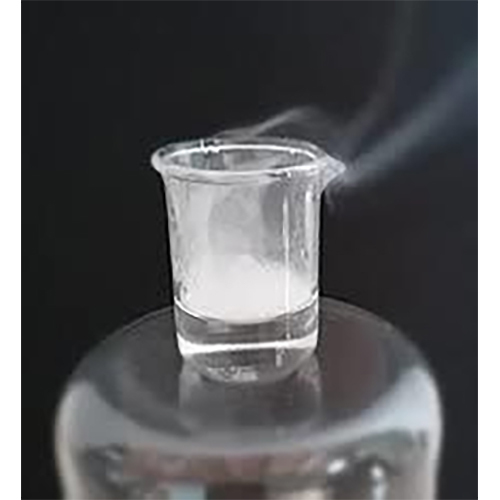
Trifluoroacetic acid (TFA) is an organofluorine compound with the chemical formula CF3CO2H. It is a structural analogue of acetic acid with all three of the acetyl groups hydrogen atoms replaced by fluorine atoms and is a colorless liquid with a vinegar like odorExceptional Solvent CapabilitiesTrifluoroacetic Acid serves as an excellent solvent for proteins and polyesters, demonstrating remarkable miscibility with a range of organic solvents including methanol, ethanol, benzene, and acetone. This makes it highly valuable in laboratories and the pharmaceutical industry, where precise solubility is crucial for complex syntheses and purifications.
Highly Acidic and StableBoasting an acidity more than 100,000 times stronger than acetic acid, TFA is a powerful agent for acid-catalyzed reactions. Its stability, despite being non-combustible, is balanced by careful compatibility considerations, requiring storage away from bases and strong oxidizing agents to ensure safe handling.
FAQs of TRI FLUORO ACETIC ACID:
Q: How should Trifluoroacetic Acid (TFA) be stored for safe handling?
A: TFA should be stored at room temperature in tightly sealed containers, away from incompatible substances such as strong bases, oxidizing agents, water, and combustible materials. Due to its hygroscopic nature, exposure to moisture should be avoided to maintain its purity and stability.
Q: What are the main industrial uses of Trifluoroacetic Acid?
A: Trifluoroacetic Acid is widely used as a solvent in pharmaceuticals, protein chemistry, and polymer manufacturing. It is particularly valued for its ability to dissolve proteins, polyesters, and a broad range of organic compounds, facilitating efficient synthesis and purification processes.
Q: When is TFA preferred over acetic acid in chemical applications?
A: TFA is chosen over acetic acid when significantly stronger acidity or enhanced solvency is required. Its high acidity, due to the trifluoromethyl group, enables reactions that demand strong proton donors, as well as rapid dissolving of substances that are otherwise challenging to solubilize.
Q: Where is Trifluoroacetic Acid commonly exported or supplied from?
A: TFA is manufactured, exported, and supplied by companies located in India, serving pharmaceutical, chemical, and research institutions worldwide. Its broad utility ensures continual demand across global markets.
Q: What is the process for using TFA as a protein solvent?
A: When used as a protein solvent, TFA is combined with protein samples in controlled laboratory conditions. Its strong acidity and solubility properties facilitate rapid dissolution and extraction, which is essential for downstream applications such as peptide synthesis or purification.
Q: What are the benefits of using Trifluoroacetic Acid in pharmaceutical applications?
A: TFA offers high purity (99%), strong acidic action, and exceptional solvency, making it indispensable in pharmaceutical synthesis, particularly for complex molecule preparation and analytical work. Its reactivity also enables the efficient modification of target compounds with minimal impurities.





 English
 Spanish
 French
 German
 Italian
 Chinese (Simplified)
 Japanese
 Korean
 Arabic
 Portuguese
 Send Inquiry

